Custom software development for businesses that need useful systems

Industrial Hypertext helps Perth businesses turn messy workflows, spreadsheet-heavy admin, and brittle legacy processes into practical software that people can actually use day to day.

Our main focus is custom business software: internal systems, workflow tools, client portals, inspection workflows, and staged modernisation work. We also deliver website projects where the real goal is better enquiries, quoting, and operational follow-through.

AI-accelerated delivery is part of the toolkit where it genuinely helps shorten delivery time or reduce repetitive work, without compromising reliability or engineering judgement.

Typical starting points: "we need a better internal workflow", "our current system is holding staff back", "we need inspection reporting to work properly in the field", or "our website needs to generate better enquiries and fit the business better".

Discuss Custom Software   See IHTMaps Inspection Software   Request Website Quote

Inherited software takeover
Step into existing systems after the original developer moves on.
Safer change
Add tests, coverage, and CI/CD guardrails before risky changes.
Workflow outcomes
Internal tools, inspections, and practical operational improvements.

Best fit for: businesses, councils, contractors, and technical teams that need a useful operational outcome rather than a long discovery process.

See software modernisation example  |  See website development details  |  Call 0432 000 583

Need custom software?
Internal tools, workflow systems, and operational apps
See software modernisation example
🗺
Need better inspections?
Mobile workflows, photos, maps, and reporting
See mobile inspection workflow example
🔗
Need a better website?
Practical builds focused on enquiries
See website development details
Who this is for: businesses, councils, engineering firms, contractors, and technical teams that need custom software, better inspection workflows, a stronger website, or a mix of all three. We also run a developer jobs and hiring board for recruiters and software professionals.

Software Development

Custom software development for businesses that need useful systems, workflow tools, and operational improvements.

  • Internal tools and business systems
  • Workflow automation and operational software
  • Python desktop apps using Tkinter for practical internal tools and operator workflows
  • AI-accelerated delivery where it genuinely helps

Discuss Software Development

Website Development

Practical website work for businesses that need a stronger online presence and better enquiry flow.

  • New builds and major upgrades
  • Clearer messaging and better quote paths
  • SEO support where it helps the broader project

Request Website Quote

IHTMaps Inspection Software

For councils and inspection teams that need faster field workflows and clearer reporting.

  • Mobile inspections with photos/maps
  • Reduced admin handoff friction
  • Practical onboarding for field teams

View IHTMaps Details

Recent software delivery examples

If you are looking for a capable software development partner, this is the kind of work we already do for clients — especially stepping into existing systems after the original developers have moved on, then fixing bugs, adding features, and steadily improving them on an ongoing contract basis.

  • Taking over a long-running custom CRM and booking system with NetSuite integration for a medical products business, then maintaining it, fixing bugs, and extending it after the original developers had moved on
  • Setting up a scalable AWS environment with Python FastAPI, EC2/ECR, S3, and load balancing for a stockbroking client
  • Modernising a Ruby on Rails application with CI/CD pipelines and deployment automation to Azure
  • Taking over inherited systems and adding automated tests, unit test coverage, and code coverage reporting so changes become safer and the business is less exposed to accidental breakage
  • Building CI/CD pipelines that enforce those tests automatically so teams cannot forget to run them before shipping changes, including GitHub Actions and on-premises delivery via self-hosted runners
  • Setting up OpenClaw and Codex workflows that pull code from GitHub, implement changes, push updates back, and run unit tests in CI/CD to catch regressions before deployment
  • Automating Excel and CSV data imports so staff do not have to process one source at a time manually
  • Using OpenCV for classical bitmap to vector conversion and comparing those results with deep-learning based image-processing workflows for specialised visual transformation
  • Using genetic algorithms to evolve better-performing solutions for computer vision problems with many interacting settings, reducing manual trial and error when tuning complex image-processing workflows
  • Rapidly prototyping FPGA boards in Verilog by stepping into inherited hardware/software setups, getting them working fast for real-world testing, and turning rough existing systems into something reliable enough to validate ideas and iterate with less friction
  • Using Claude for rapid prototyping to turn ideas into working apps in a single day, helping validate workflows quickly with something real and testable instead of just mockups
  • Using OpenCV-based image comparison to help automate deduplication across large datasets, reducing manual checking where large volumes of near-duplicate images had to be sorted or matched
  • Troubleshooting PostgreSQL servers when production systems were misbehaving, helping teams restore stability and work through database-side reliability or performance problems
  • Using AI to help plan software development projects into clear phases and then automatically implement each phase, turning rough ideas into a more structured delivery pipeline
  • Using agentic AI to help document complex legacy software systems, turning hard-to-follow codebases into clearer technical understanding for the people maintaining or modernising them
  • Using AI-assisted development to help port legacy applications into more modern languages and frameworks, then hardening the result so the new system is safer, easier to maintain, and less dependent on outdated tooling
  • Using agentic coding workflows to document legacy PowerApps systems and add new features quickly, helping organisations improve and extend hard-to-maintain internal tools without starting from scratch
  • Helping modernise legacy Ruby on Rails applications so useful existing systems can be improved, extended, and kept maintainable instead of being left to decay or rewritten unnecessarily
  • Modernising legacy Perl applications so older business-critical systems can be cleaned up, extended safely, and kept commercially useful instead of becoming untouchable risk
  • Adding self-service listing editing to an established classifieds platform so users can update their own listings directly instead of relying on admin-mediated changes
  • Stepping in as a part-time contractor when businesses have been left without their original developer, then continuously fixing bugs, shipping features, and keeping important internal systems moving
  • Applying controlled database migration workflows in Python projects to reduce deployment risk
  • Building Python desktop applications with Tkinter where a lightweight internal admin tool, data-entry utility, or operator-facing workflow is a better fit than forcing everything through the browser
  • Converting single-tenant web apps into multi-tenant SaaS platforms so each customer gets an isolated workspace while the business keeps one shared codebase, including tenant-aware auth, data scoping, live-data migrations, and safe signup/invite/email link flows
  • Getting Power Apps based field workflows working properly on small tablets so frontline teams can use them reliably on-site instead of fighting cramped desktop-style layouts
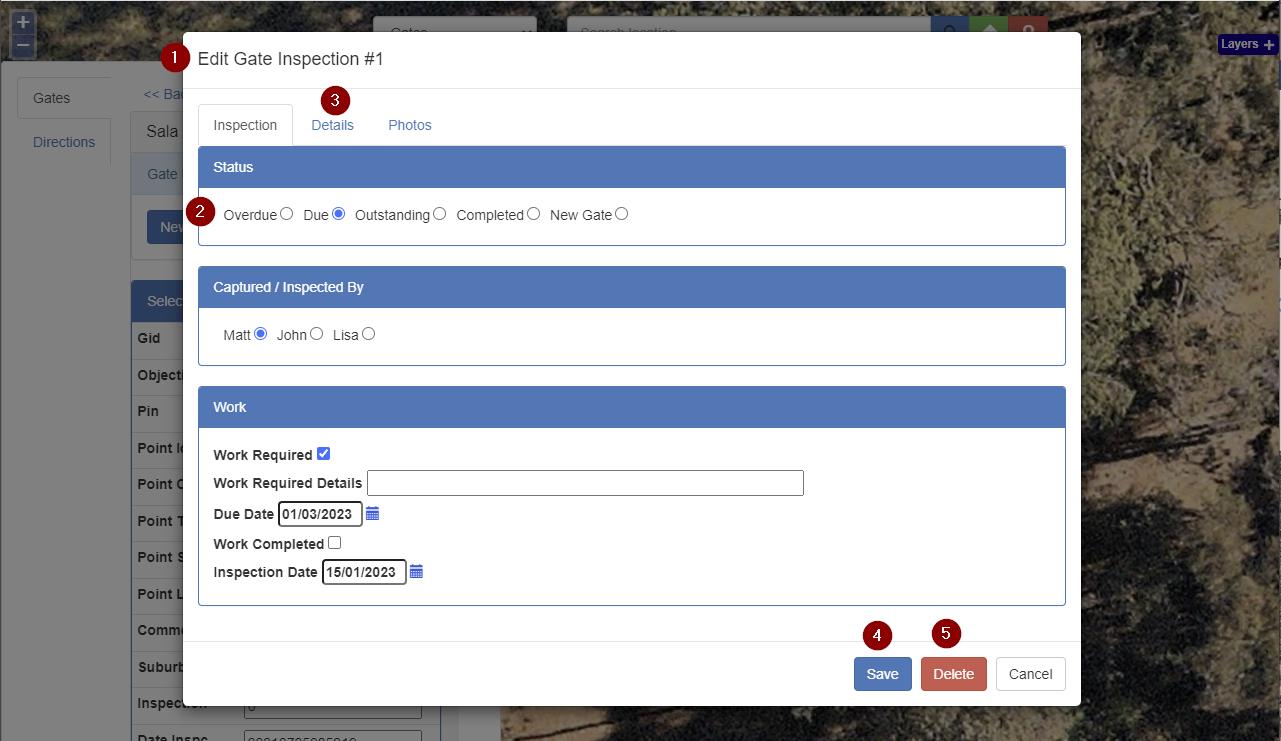
  • Building structured inspection systems for field teams that need better capture, follow-up, and reporting

That mix is a good fit for businesses that need custom business software, workflow tools, internal systems, integrations, modernisation, computer-vision style processing, or dependable ongoing feature delivery.

We also build our own workflow and accountability tools. For a lighter-weight example, see Task Roller and Task Roller Habits.

Tell us what your current workflow or system needs to do, or explore software modernisation and AI-accelerated delivery examples first.

Not sure whether to hire developers or solve the software problem first?

A lot of enquiries start with "we think we need a developer" when the more urgent need is actually an internal tool, workflow fix, legacy system stabilisation, or a quoting / reporting process that needs to work properly now.

If that sounds familiar, start with our guide on how to hire software developers in Australia. It helps teams decide whether to recruit, engage a delivery partner, or do both in stages. If you are already hiring, Industrial Hypertext Jobs is also available for structured role posting and candidate discovery.

Read the hiring guide   Visit Industrial Hypertext Jobs

What happens when you enquire

  1. You tell us whether the main need is custom software, inspection workflow improvement, or a website rebuild.
  2. We reply within 1 business day with practical next steps and, where useful, a recommended starting scope.
  3. We focus first on the highest-impact work that helps your team operate better, reduce manual effort, or win more work.

No long forms. No agency lock-in. Clear scope and practical delivery. If you already know the problem area, start the conversation here.

Request a quote or call 0432 000 583 to discuss your website, app, database, or custom software project.

E-business card (QR ready) for conferences and in-person shares. · Site map

Copyright © 2026 Industrial Hypertext - Software Development Perth, Western Australia | All rights reserved